



The Future of Homes in Egypt: How Smart Lighting is Defining Modern Living

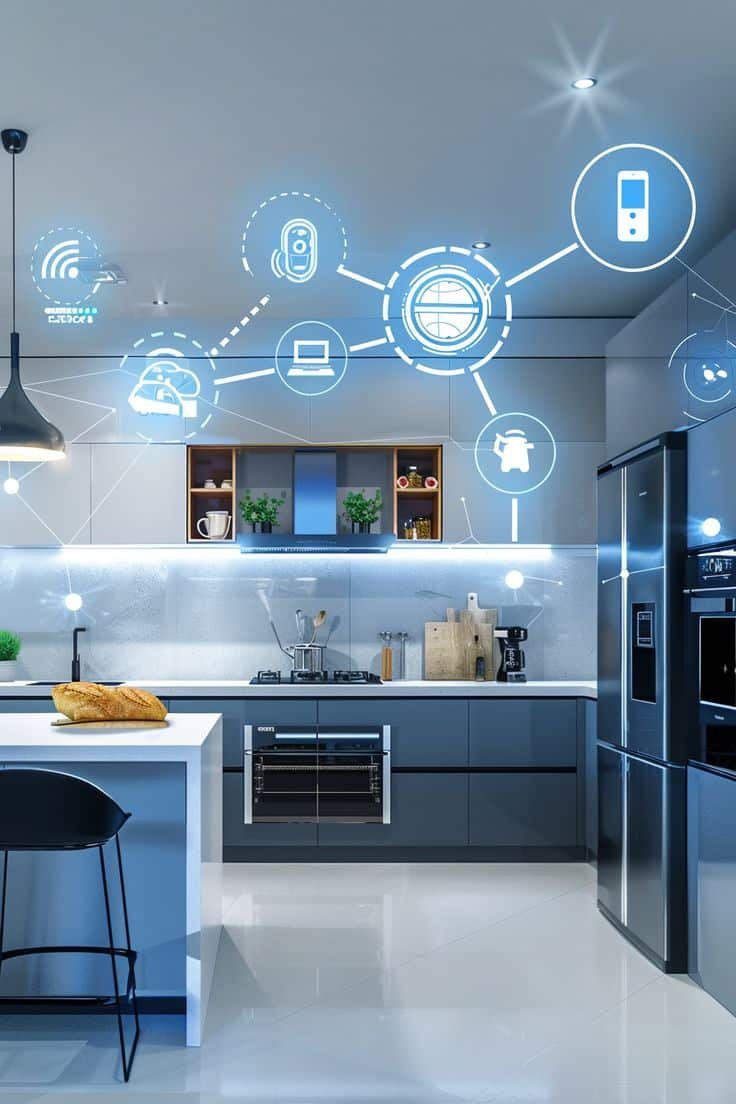
Discover how smart lighting will change the future of our homes, evolving from a luxury to an essential element for health and security. Learn about voice control, automation, and human-centric lighting systems.
Smart Lighting and the Future of Our Homes: Beyond the Light Switch, Towards Homes That Breathe, Think, and Feel
For decades, our relationship with lighting in our homes was simple and direct: a switch on the wall, turning on or off. That was the pinnacle of home technology. Today, as we stand on the cusp of the mid-2020s, this concept is rapidly fading to be replaced by an integrated ecosystem where lighting is no longer just a static tool but has become the nervous system of the modern home. This is smart lighting, and it’s not just a passing trend; it’s a quiet revolution that is redefining our relationship with our private spaces and paving the way for the future of our homes.
The term “smart lighting” is often reduced in people’s minds to mere color-changing LED bulbs controlled by a phone. But this represents only the tip of the iceberg. The reality is much deeper and more impactful. We are talking about systems that anticipate our needs, adapt to our biological rhythms, enhance our security, and save energy in ways previously not possible. The future of our homes is not just about houses connected to the internet, but houses that breathe, think, and feel, and smart lighting is the primary language of communication in this new world.
In this comprehensive guide, spanning over 3000 words, we will delve deep into this revolution. We will explore what true smart lighting is, its transformative benefits, and how to build your own system step-by-step. Most importantly, we will look to the future to see how lighting will merge with our mental and physical health through concepts like “Human-Centric Lighting,” and how the foundation for all these amazing technologies begins with choosing high-quality lighting fixtures, like those offered by leading brands such as TagLighting-eg, to be the perfect canvas on which this technology will paint our future.

1. What is Smart Lighting, Really? A Journey from Simple Gadget to Integrated Ecosystem
To understand smart lighting, we must look at it as progressing levels of intelligence and integration.
Level One: The Entry Point – Smart Bulbs and Plugs
This is the level where most people start.
- Smart Bulbs: These are LED bulbs that connect directly to your home’s Wi-Fi or Bluetooth network. Through an app on your phone, you can turn them on and off, control their brightness (dimming), and, in many cases, change their color to millions of different shades.
- Smart Plugs: These are simple devices that you plug into a regular electrical outlet, and then plug any traditional lamp (like a table lamp or floor lamp) into it to turn it into a smart device controllable via the app.
- Advantages: Easy installation, low initial cost, and an excellent way to experience the concept.
- Disadvantages: If someone turns off the lamp from the traditional wall switch, it loses its network connection and its smart functions cease.
Level Two: The Integrated Solution – Smart Switches and Dimmers
This is the natural and more practical evolution.
- Smart Switches: The traditional wall light switch is replaced with a smart one. This switch controls the entire lighting circuit.
- Advantages:
- Dual Control: You can always use the wall switch normally, in addition to controlling it via app or voice.
- Universal Compatibility: It can control any type of lighting fixture connected to it, whether it’s a ceiling spotlight, a chandelier, or other fixtures, without the bulbs themselves needing to be smart.
- Elegant Appearance: It maintains the aesthetic of the walls and provides a seamless user experience for everyone, including guests.
- The Solid Foundation: This level requires your basic lighting fixtures to be of high quality and dimmable. Relying on a strong foundation of excellent lighting fixtures, such as the range of spotlights and chandeliers from TagLighting-eg, ensures that the smart switch will work efficiently and smoothly, providing a perfect, flicker-free dimming experience.


Level Three: The Professional Ecosystem – Centralized Systems
This is the realm of true home automation and large-scale projects.
- Wired Systems (e.g., KNX, DALI): These are systems planned during the construction or major renovation phase. All lighting fixtures and control devices are wired to a central controller.
- Advantages: Supreme reliability (not dependent on Wi-Fi), instantaneous response time, and immense capability for integration with other systems in the home (air conditioning, curtains, security, audio).
- Application: This is the preferred solution for large villas, luxury homes, and commercial projects.
2. “Why?” The Transformative Benefits of Smart Lighting
The benefits of smart lighting go beyond just impressing friends. They tangibly improve our daily quality of life.
- Unparalleled Convenience: Imagine saying, “Alexa, movie time,” and the main room lights dim, the wall sconces glow with a warm color, and an LED strip behind the TV lights up. Or turning off all the house lights from your bed with a single tap on your phone.
- Enhanced Security:
- Vacation Mode: The system turns lights on and off at random times to make it look like the house is occupied while you’re away.
- Presence Simulation: Lighting can be linked to motion sensors. When motion is detected in the garden at night, the facade lights turn on automatically to deter intruders.
- Radical Energy Efficiency: Lighting consumes a significant portion of the electricity bill. Smart systems save energy through:
- Scheduling: Automatically turning off all lights at a specific time at night or when you leave for work.
- Occupancy Sensors: Automatically turning off lights in empty rooms.
- Dimming: Lowering the lighting by just 20% can save a significant amount of energy and is almost unnoticeable to the eye.
- Personalization and Ambiance: You can design and save countless “Lighting Scenes” to suit every occasion: a “Romantic Dinner” scene, a “Study Focus” scene, a “Party” scene, or a “Relaxation” scene.
- Interactive Entertainment: Colored lighting can be synchronized with the music you’re listening to, the movies you’re watching, or even the games you’re playing, to create an immersive and stunning experience.
3. “How?” Building Your Own Smart Lighting System
It may seem complicated, but it’s simpler than you think if you follow a structured approach.
- Choose Your Platform: There are different communication protocols.
- Wi-Fi: The easiest to start with, as devices connect directly to your router. The downside is that it can slow down your network if you have too many devices.
- Zigbee/Z-Wave: Low-power mesh network protocols. Devices connect to each other and to a central “Hub,” creating a strong, reliable network that doesn’t strain your Wi-Fi.
- Matter: This is the promising new protocol aimed at unifying all smart devices to speak one language, regardless of the manufacturer. Investing in Matter-supported devices today is an investment in the future.
- Start Small, Think Big: You don’t have to convert your entire home at once. Start with one room, like the living room. You can begin with smart bulbs, then upgrade later to smart switches. The beauty of modern systems is their flexibility. You can control your existing high-quality fixtures, such as the elegant units from TagLighting-eg, using smart control solutions, and then expand gradually.
- The Voice Assistant is the Orchestra Conductor: Whether you prefer Amazon Alexa, Google Assistant, or Apple HomeKit, these platforms are what unite all your devices and allow you to control them with your voice.
4. Beyond Convenience: The Future is Human-Centric Lighting (HCL)
Here, smart lighting transitions from being a luxury tool to a wellness tool. Human-Centric Lighting (HCL) is the most revolutionary concept, built on the established science of our circadian rhythm.
- What is it? It’s a dynamic lighting system that automatically changes its color temperature (from warm to cool white) and intensity throughout the day to mimic the natural path of the sun, helping to regulate our natural biological rhythm.
- What does the daily cycle look like?
- Morning (7-9 AM): The system begins by simulating a sunrise, with the light gradually shifting from very warm to a cool white (e.g., 4000K) and increasing in brightness, helping to wake you gently, suppress melatonin, and energize you for the day.
- Midday (12-2 PM): The lighting reaches its peak brightness and coolness (up to 5000K), enhancing focus and productivity, which is ideal for home offices.
- Evening (6-9 PM): The system begins to reverse the process. The light gradually becomes warmer (returning to 2700K-3000K) and dims, reducing blue light exposure and allowing the brain to start producing melatonin in preparation for a deep, restful sleep.
- Impact on Health: Studies have shown that implementing HCL can significantly improve sleep quality, boost mood, and reduce symptoms of seasonal affective disorder. A true HCL experience depends not only on the smart controller but fundamentally requires fixtures capable of producing high-quality, consistent light across a wide spectrum of color temperatures. Partnering with suppliers like TagLighting-eg ensures that the foundational luminaires in your home are up to the standard required to deliver this advanced wellness experience.
5. The Fully Connected Home: Lighting as Part of a Larger Ecosystem
Smart lighting does not operate in a vacuum. Its true power is revealed when integrated with other smart devices in the home.
- Integration with Smart Blinds: A “Good Morning” scene not only turns on the lights but also opens the blinds to let in daylight.
- Integration with Security Systems: In case of a break-in, not only do alarms sound, but all house lights flash red and exterior lights turn on at maximum brightness.
- Integration with Entertainment Devices: Systems like Philips Hue Sync can analyze the content on your TV screen or the rhythm of music and extend the colors and tempo to the room’s ambient lighting.
- Integration with Sensors: A smoke detector not only makes a sound but also illuminates the entire escape route. A temperature sensor could change the lighting color to a light blue if the heat rises dangerously.
The future of our homes relies on this seamless integration, where all devices work together harmoniously to create an environment that is safer, more comfortable, and responsive to our needs.

6. Smart Lighting in the Egyptian Context: Trends and Opportunities
In Egypt, smart lighting is no longer just a futuristic concept but a growing reality.
- New Real Estate Projects: Many residential compounds and new cities, like the Administrative Capital, are being designed and built with a smart-home-ready infrastructure,
- Energy Savings: With a growing awareness of the importance of energy conservation, smart lighting offers a practical and effective solution for citizens to significantly reduce their electricity bills.
- Luxury Lifestyle: There is an increasing demand for modern living experiences that offer comfort, luxury, and advanced technology. Having a local partner like TagLighting-eg, who understands both the aesthetic and technical demands of the Egyptian market, is a significant advantage for developers and homeowners alike, as they can provide the essential lighting solutions that integrate seamlessly with any chosen smart system.
Conclusion: Your Next Home, Your Partner in Life
We have come a long way from relying on a simple switch on the wall. Smart lighting is the next evolutionary step, a radical shift in our relationship with our homes. It transforms our houses from silent structures into interactive partners that respond to our needs, enhance our health, and protect us. The future is not just about owning smart gadgets, but about living in smart environments that adapt to us.
Starting your journey into smart lighting today is an investment not only in the value of your property but in the quality of your daily life. Whether you begin with a single smart bulb or plan an integrated system, always remember that the quality of the light itself is the foundation. Choosing durable, high-performance lighting fixtures from a trusted source like TagLighting-eg is what ensures you have a strong and perfect foundation on which to build the smart, bright home of the future.
Keyword List:
#SmartLighting #FutureOfHomes #SmartHomes #TagLighting_eg #SmartIllumination #LightingControl #HomeAutomation #InternetOfThings #HumanCentricLighting #HCL #EnergyEfficiency #HomeSecurity #LightingScenes #SmartLEDBulbs #SmartLightingSystems #FutureOfLighting #EgyptVision2030 #HomeTechnology